

Audiobook Narration Academy
Audiobook Narration Training Course
Start Your Career with JMM
Learn how to become an audiobook narrator—or take your career to the next level—with training guided by a GRAMMY-winning production company that casts and produces thousands of titles for major publishers.
The

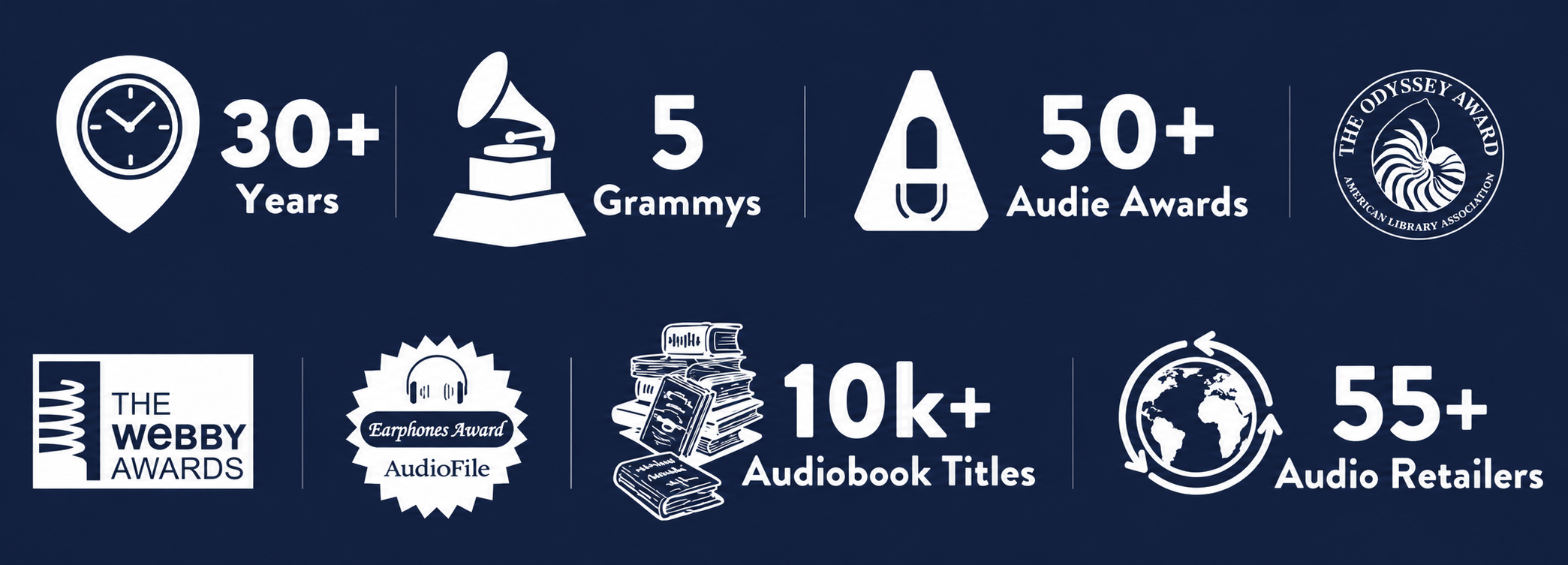
30+ years in the audiobook industry · GRAMMY-winning productions · Thousands of titles produced annually
Training led by the same professionals who cast, direct, and deliver audiobooks for major publishers.
Many performers first encounter audiobooks through voiceover training—but audiobook narration is its own discipline, with distinct performance demands, technical standards, and career paths.
That’s why Narration Academy teaches audiobooks—and only audiobooks.
Our programs are built by the same producers, directors, and engineers who create thousands of audiobooks every year for major publishers. We don’t speculate about industry trends and standards. We live them—daily.
John Marshall Media (JMM) has spent over 30 years inside the audiobook business, earning multiple GRAMMY Awards and dozens of Audie Awards, and producing at massive scale for every major publisher. We know what they’re looking for.
If you’re looking for generic voiceover training, this isn’t it. If you want to learn how audiobooks actually work at the professional level, you’re in the right place.

















How to Become an Audiobook Narrator
Becoming an audiobook narrator requires more than a good voice. You need storytelling ability, long-form stamina, professional audio quality, and an understanding of how publishers cast audiobooks.
Most narrators start with training, develop a strong demo, and learn how to present themselves to casting teams.
At Narration Academy, you’ll learn the performance, technical, and professional skills needed to move from beginner to working narrator—guided by the standards used by a GRAMMY-winning production company.
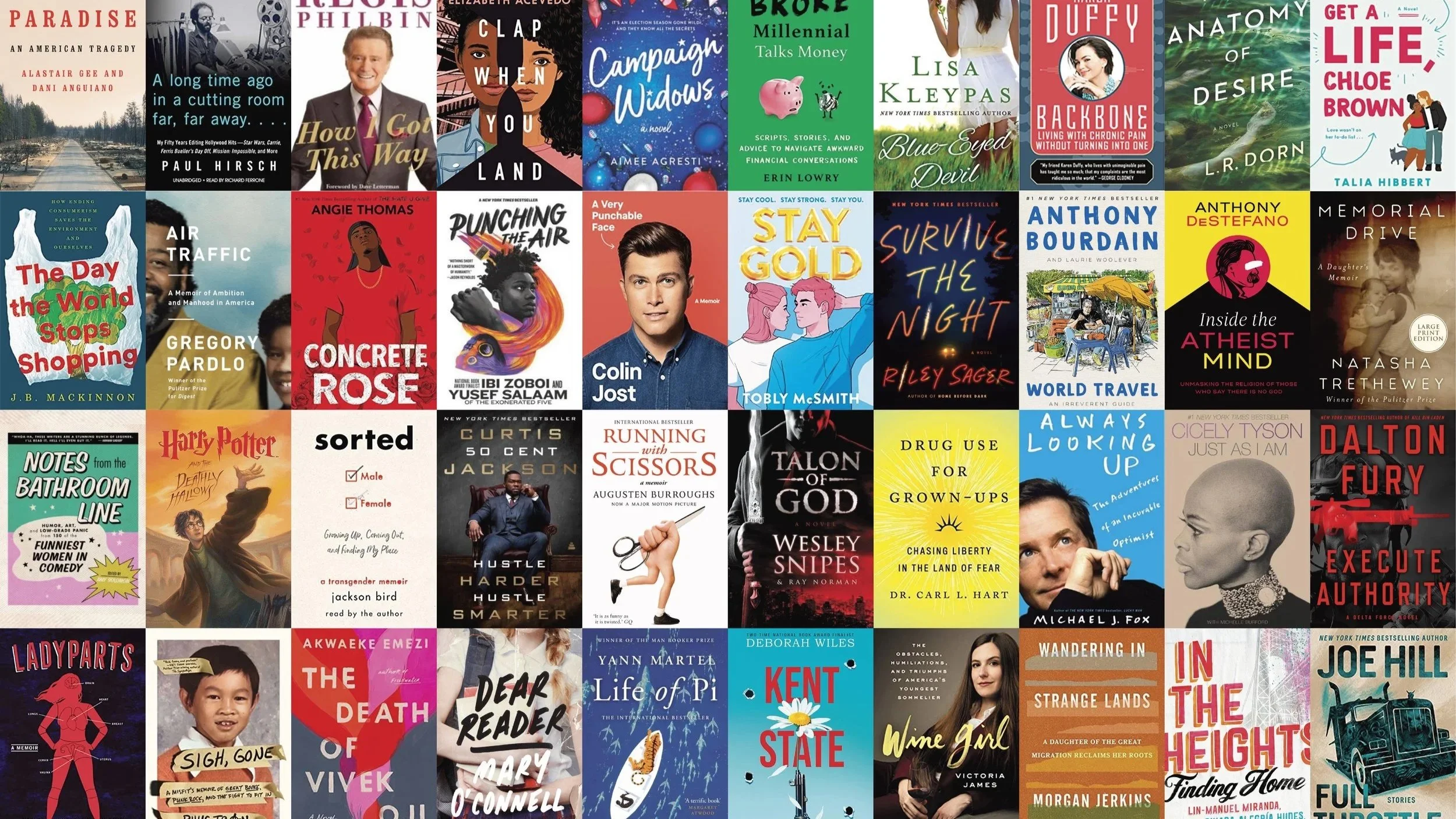
Learn from the best in the audiobook business.
John Marshall Media doesn’t teach from theory or trends. Our instructors are working audiobook producers, directors, engineers, and narrators who create audiobooks every day for major publishers.
Train with professional audiobook narrators and coaches, guided by the standards and expectations of a GRAMMY-winning production company that has produced thousands of audiobook titles for major publishers.
Meet Your Coaches
-
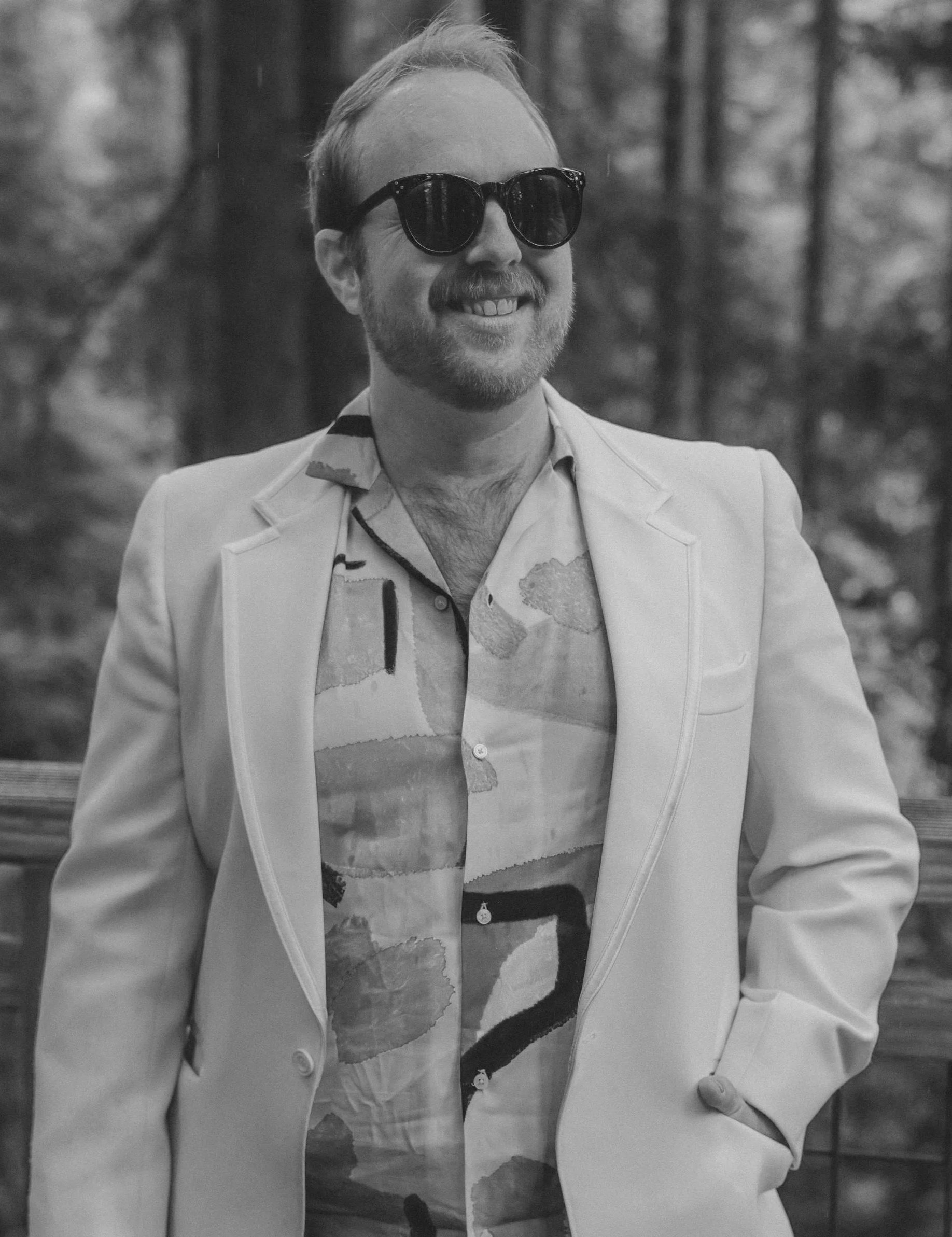
Brock Grenfell
HEAD ENGINEER
-
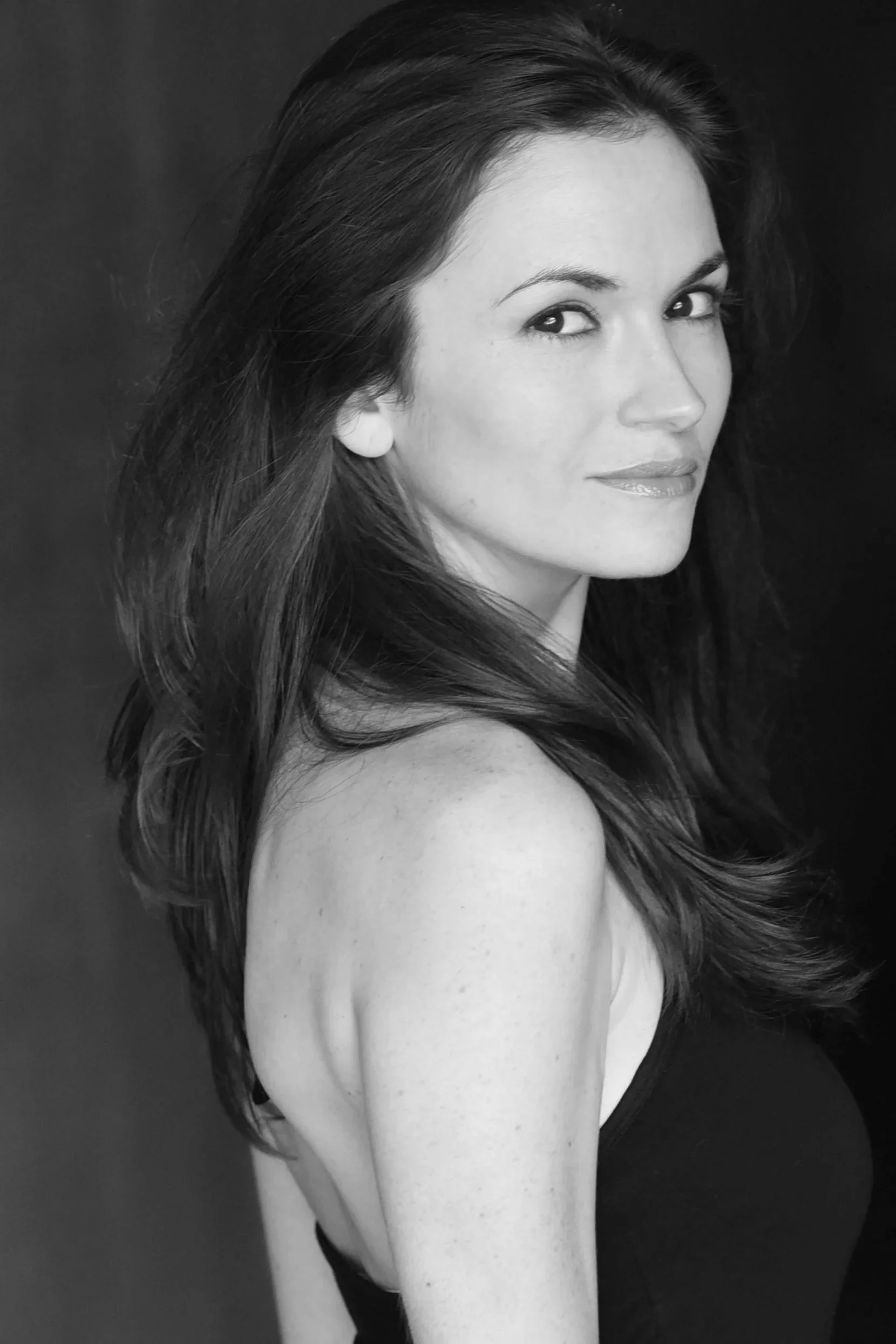
Hallie Ricardo
NARRATOR AND DIRECTOR
-

Casey Holloway
VOICEOVER ARTIST/ ACTOR / NARRATOR
-

Zane Birdwell
SENIOR PRODUCER
-

John Marshall
FOUNDER JMM
Narrator Tips
Practical advice from JMM’s producers, engineers, and narration professionals to help you strengthen your performance and your sound.
Audiobook Narration Training Course
Courses & Classes for Every Stage
These audiobook narration courses and classes are designed to help you learn how to become an audiobook narrator, from your first recording to professional-level performance.
Train with professional audiobook narrators and coaches, guided by the standards and expectations of a GRAMMY-winning production company that has cast and produced thousands of audiobook titles for major publishers.
Pre-Beginner / Getting Started
Is audiobook narration right for you? Let us help you decide.
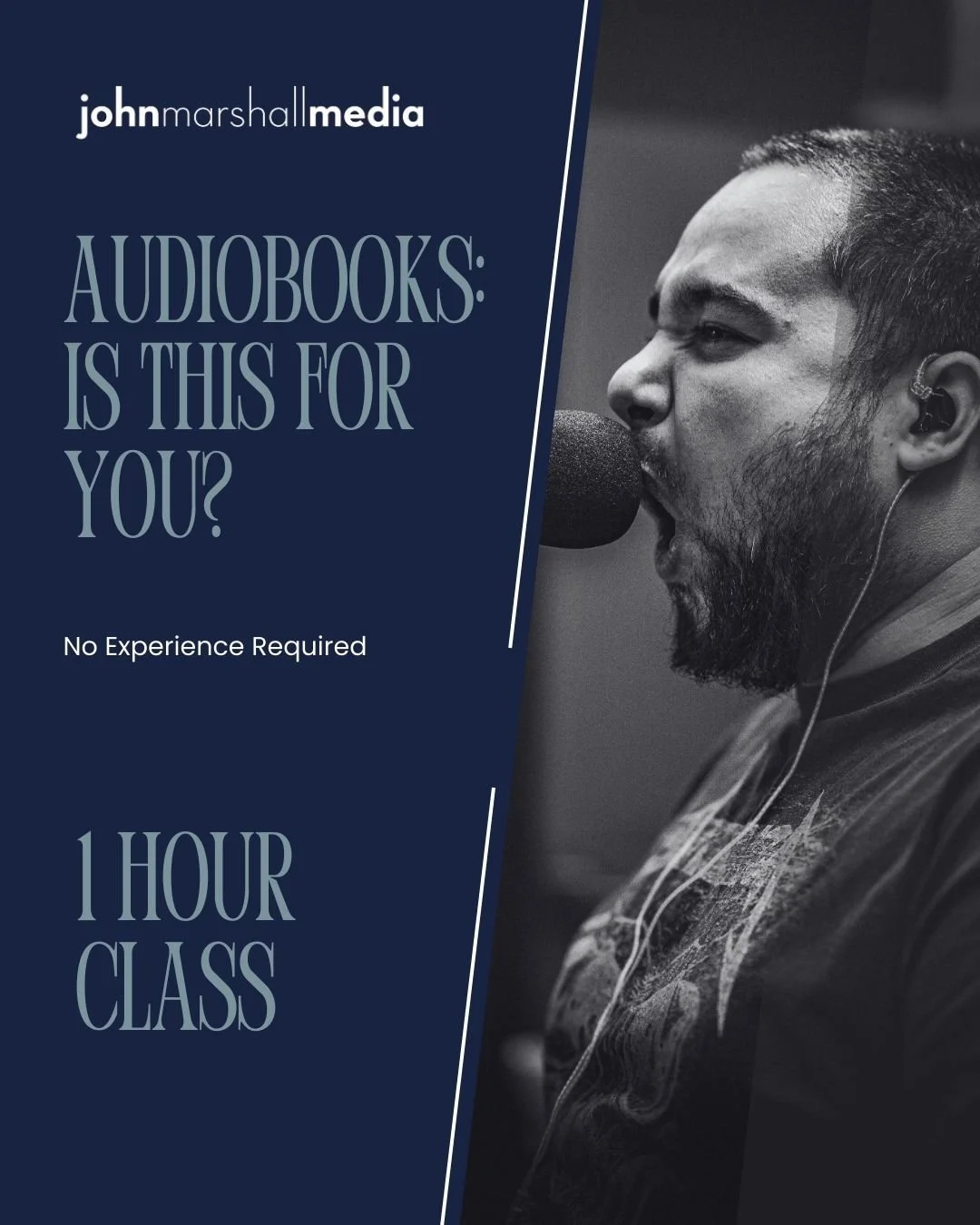
Curious about audiobook narration but not sure if it’s right for you? This pre-beginner, live online class is designed for anyone exploring how to become an audiobook narrator and wanting a clear, realistic picture of what getting started actually involves.
In this session, we’ll walk through the fundamentals of audiobook narration for beginners, including what the work is really like, how audiobook narration differs from other types of voiceover, and what ACX expects from new narrators. You’ll also learn what skills matter most at the beginning, what equipment is truly necessary (and what isn’t), and how to tell whether this path aligns with your voice, interests, and long-term goals.
This class is not about performing perfectly — it’s about understanding the landscape, asking the right questions, and gaining the confidence to decide your next step. No experience is required, and there’s no pressure to audition or perform. You’ll leave with clarity, practical knowledge, and a better sense of whether audiobook narration is something you’d like to pursue further.
No experience required. Designed for absolute beginners and the audiobook-curious.
Perfect for those who want clarity before committing to training or equipment.
Buy your spot and we’ll be in touch to schedule a time that works for you.
Cancellation Policy
We understand that plans can change. Cancellations made at least 7 days in advance will receive a full refund. Cancellations made between 7 days and 48 hours prior to the session are eligible for a 50% refund. Cancellations within 48 hours, including no-shows, are non-refundable.
Beginner to Intermediate - Getting Started in Audiobook Narration
New to audiobook narration? This is where you begin.
These programs are designed for performers who want a clear, honest introduction to long-form narration—what it is, how it works, understanding ACX and how to use it to start your career, and whether it’s the right path before making larger investments of time or money. These programs are especially useful for narrators preparing to work on platforms like ACX or to present themselves professionally as an audiobook narrator for publisher casting.
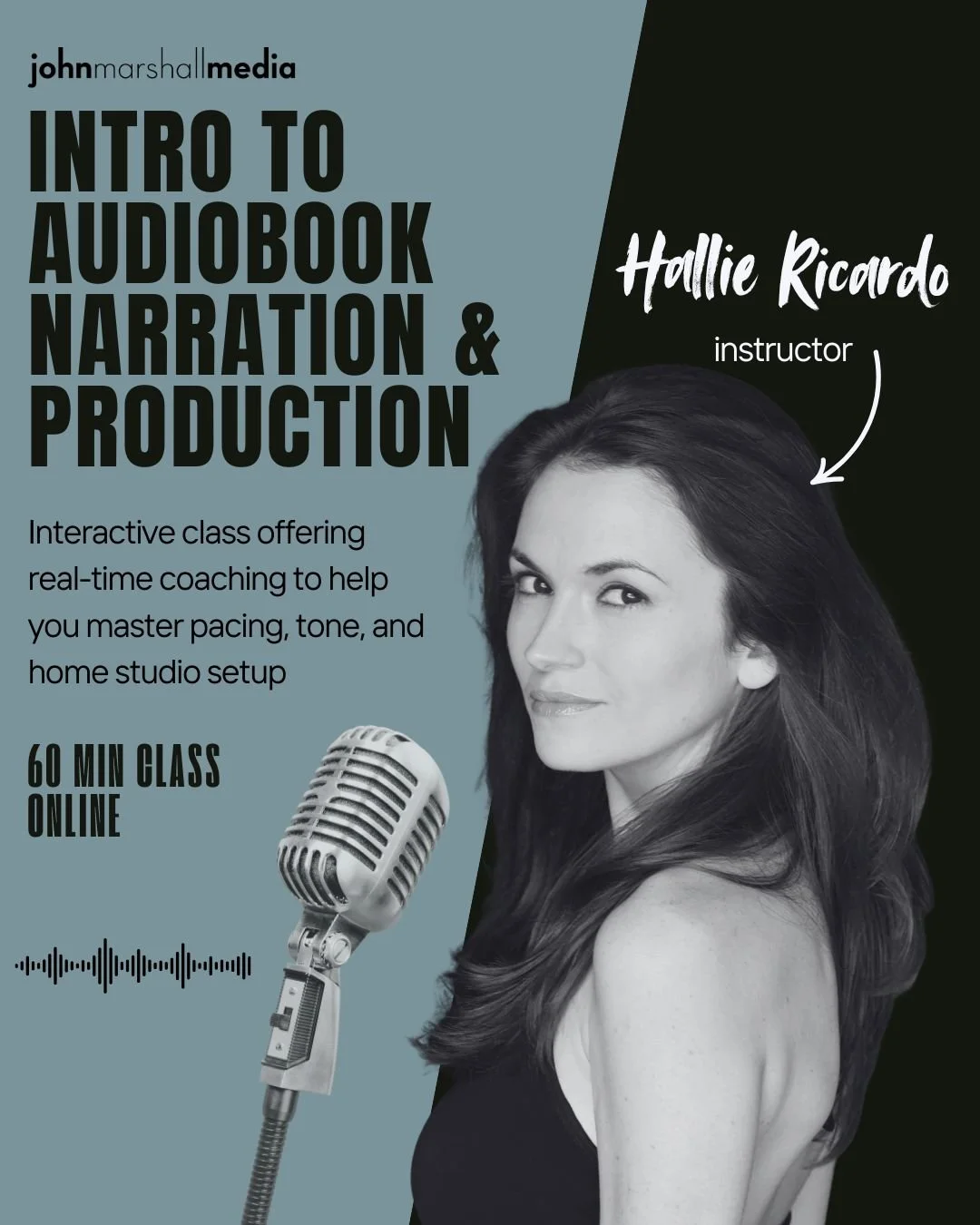
Kickstart your audiobook narration journey with our 60-minute live workshop for only $49 ($39 early-bird), featuring personalized feedback and expert tips on narration and ACX-ready production! Unlike self-paced courses, this interactive class offers real-time coaching to help you master pacing, tone, and home studio setup—perfect for beginners aiming to narrate for Audible. Sign up now to secure your spot and take the first step toward professional audiobook narration!
Class Overview
Duration: 60 minutes
Price: $49 (early-bird: $39 for first 10 sign-ups or returning students)
Format: Live, interactive online session via Zoom with real-time feedback
Target Audience: Beginners interested in audiobook narration, aspiring voice actors, or authors looking to self-produce audiobooks
Objective: Provide a practical introduction to audiobook narration and production, focusing on key skills, ACX standards, and actionable next steps, with personalized feedback to enhance learning.
Class Outline
0:00–5:00 | Welcome and Introduction (5 min)
Objective: Set expectations and build excitement for audiobook narration.
Content:
Brief instructor introduction (highlight expertise in audiobook narration/production).
Overview of the audiobook industry: growth, opportunities, and demand (e.g., Audible’s rise, ACX platform).
What to expect: Learn core narration techniques, understand ACX standards, and receive live feedback.
Activity: Quick poll (via Zoom chat): “Have you narrated before, or is this your first step?” to gauge audience experience.
5:00–20:00 | Narration Basics: Finding Your Voice (15 min)
Objective: Teach foundational narration skills tailored to audiobooks.
Content:
Key elements of audiobook narration: pacing, tone, character differentiation, and emotional delivery.
Differences between audiobook narration and general voiceover (e.g., stamina for long-form reading, consistency across chapters).
Common beginner mistakes: monotone delivery, overacting, or ignoring pacing.
Demo: Instructor reads a short audiobook excerpt (1–2 min) to model pacing and tone.
Activity: Participants read a 30-second provided script excerpt (fiction or nonfiction, sent pre-class) in breakout rooms or mute/unmute. Instructor provides quick group feedback on pacing/tone.
20:00–35:00 | Home Studio Basics and ACX Standards (15 min)
Objective: Introduce affordable home studio setups and ACX technical requirements.
Content:
Minimum equipment: USB microphone (e.g., Audio-Technica ATR2100x, ~$99), pop filter, and quiet space.
Free software options: Audacity for recording/editing.
ACX audio standards: consistent volume (-18 to -23 dB RMS), no background noise, proper file formatting (192 kbps MP3).
Tips for a DIY recording space: blankets, closets, or foam panels to reduce echo.
Demo: Show a sample audio clip (clean vs. noisy) to illustrate ACX compliance.
Activity: Participants share one challenge they face with their current setup (e.g., background noise, no mic) via chat. Instructor offers quick solutions.
35:00–50:00 | Live Feedback and Practice (15 min)
Objective: Provide personalized coaching to reinforce skills and build confidence.
Content:
Select 3–4 participants (time permitting) to read a 30-second script aloud (same or new excerpt).
Instructor provides targeted feedback on pacing, tone, or clarity, referencing audiobook-specific goals (e.g., “Try slowing down for emotional beats”).
Group discussion: Common feedback themes and how to practice post-class.
Activity: Live reading and feedback session. Remaining participants follow along, noting one tip they’ll apply.
50:00–60:00 | Next Steps and Q&A (10 min)
Objective: Equip participants with actionable steps and resources to continue their journey.
Content:
Practice tips: Record daily, listen to bestselling audiobooks, join narration communities (e.g., ACX forums, Reddit’s r/audiobooks).
Pathways to audiobook narration: Auditioning on ACX, building a demo reel, or narrating for royalty-share projects.
Upsell: Promote your “Fix-My-Read Workout” or “Home-Studio to ACX-Ready” classes for deeper skill-building ($49–$59).
Handout (emailed post-class): Checklist for ACX submission, recommended mics, and free resources.
Activity: Open Q&A. Address participant questions (e.g., “How do I choose my first audiobook project?” or “What’s the best mic under $100?”).
Maximum students = 12
Cancellation Policy
We understand that plans can change. Cancellations made at least 7 days in advance will receive a full refund. Cancellations made between 7 days and 48 hours prior to the session are eligible for a 50% refund. Cancellations within 48 hours, including no-shows, are non-refundable.
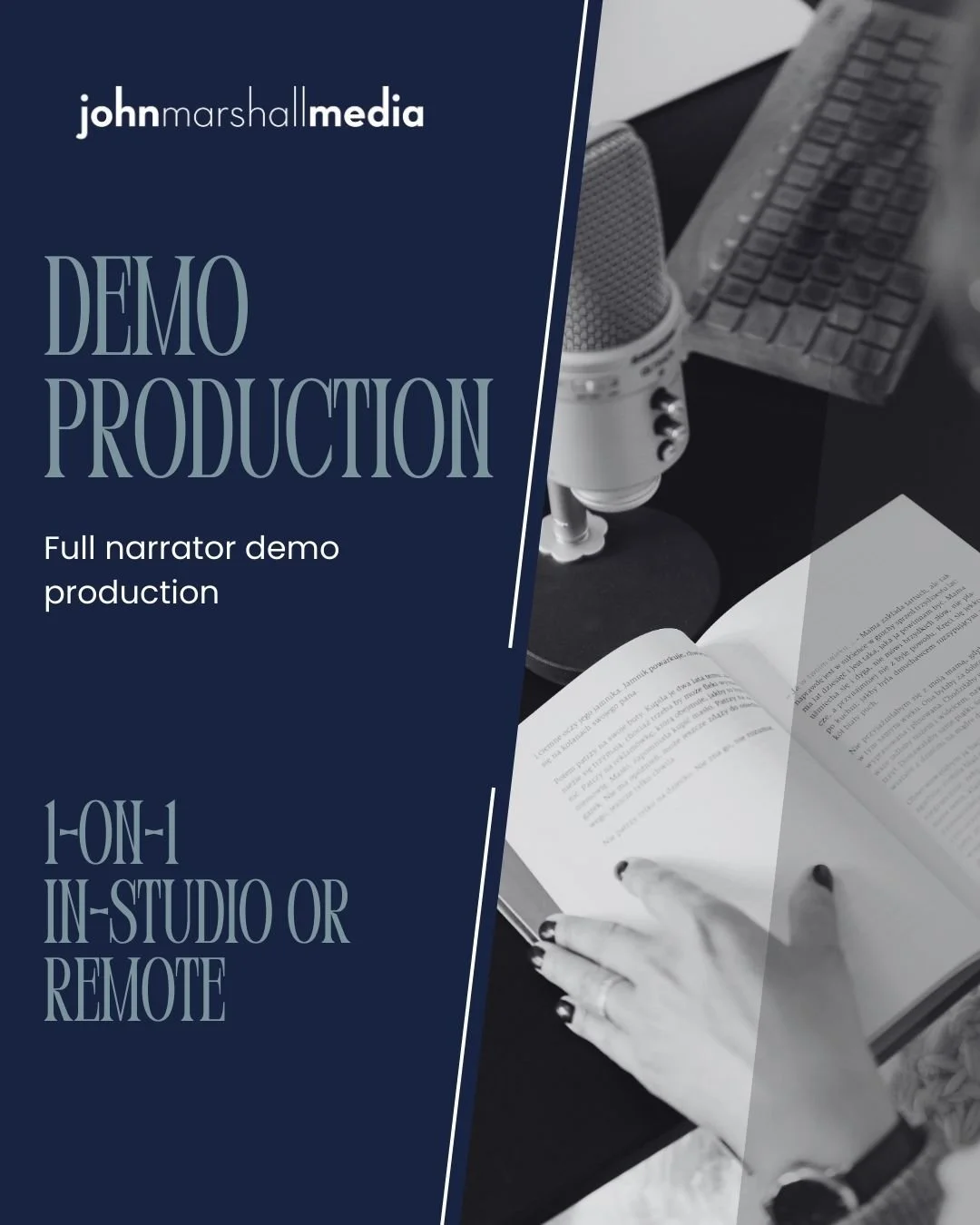
Every narrator's path is different. That's why we offer Full Demo Production, Demo Curation from Existing Samples, and Consultation / Sample Assessment services—so you can get the level of support that's right for where you are in your narration journey.
FULL DEMO PRODUCTION
Remote: $2,220
In-studio: $2,520
Our full demo production package is designed to showcase your unique strengths as a narrator and create a polished, professional demo tailored to your goals.
What's Included:
• Discovery Meeting – We begin with a one-on-one consultation to discuss your style, experience, career goals, and the type of demo that best supports your next steps. For remote demos, we'll also review the home recording process. (Approx. 1 hour)
• Prep & Planning – Your director works with you to select and refine material that highlights your strengths. We source scripts, pull sides, provide feedback, and ensure everything is ready before recording. Scheduling and session coordination are also included. (Approx. 2–3 hours, including an additional prep meeting)
• Recording Session – Record either in one of our studios or from your home studio with live direction and support. Session length varies based on the narrator and project needs. (Typically 1–2 hours)
• Post-Production – Professional editing and assembly of your demo. (Approx. 1 hour)
• Review Session – Listen to the completed demo with your team, discuss any final notes, and ensure the finished product reflects your goals. (Approx. 1 hour)
• Final Revisions & Mastering – One round of adjustments is included, followed by final mastering and delivery of your completed demo. (Approx. 1 hour)
Choose the recording experience that works best for you: remotely from your home studio or in person at our New York City or Atlanta facilities.
If you plan to record from home, we strongly recommend taking our Home Studio Setup class to ensure your recording environment and equipment meet professional audiobook standards.
DEMO CURATION FROM EXISTING SAMPLES
Remote: $1,290
This service is designed for narrators who already have recorded material and would like expert guidance shaping it into a cohesive, marketable demo.
What's Included:
• Discovery & Assessment Meeting – We begin with a one-on-one consultation to discuss your goals, evaluate your existing recordings, and determine whether your current material can support a curated demo or if a full demo production would better serve your needs. (Approx. 1 hour)
• Demo Strategy & Planning – Your director carefully reviews your recordings, selects the strongest excerpts, develops the running order, and identifies the material needed to create a polished demo. You'll receive guidance on recording any required intros or slates, and we'll coordinate all materials for production. (Approx. 1–2 hours)
• Post-Production – Professional editing, assembly, and mixing of your demo. (Approx. 1 hour)
• Review Session – Listen to the completed demo with your team, discuss any final notes, and ensure the demo accurately reflects your strengths and goals. (Approx. 1 hour)
• Final Revisions & Mastering – One round of adjustments is included, followed by final mastering and delivery of your completed demo. (Approx. 1 hour)
CONSULTATION / SAMPLE ASSESSMENT
Remote: $600
Not sure whether you're ready for a demo? Looking for professional feedback on your current samples?
This consultation is designed for narrators who would like expert guidance on their existing recordings before taking the next step.
What's Included:
• Sample Review – A director listens to your submitted recordings and evaluates performance, audio quality, demo suitability, and overall marketability.
• One-on-One Consultation – Meet with your director to discuss strengths, areas for improvement, and opportunities for development. You'll receive honest, actionable feedback tailored to your goals. (Approx. 1 hour)
• Recommendations & Next Steps – Receive guidance on whether your material is ready for demo curation, would benefit from a full demo production, or if additional coaching, recording, or sample development is recommended.
This service is ideal for narrators seeking professional feedback, direction, and a clear understanding of their next best step.
Buy your spot and we’ll be in touch to schedule a time that works for you.
Cancellation Policy
We understand that plans can change. Cancellations made at least 7 days in advance will receive a full refund. Cancellations made between 7 days and 48 hours prior to the session are eligible for a 50% refund. Cancellations within 48 hours, including no-shows, are non-refundable.
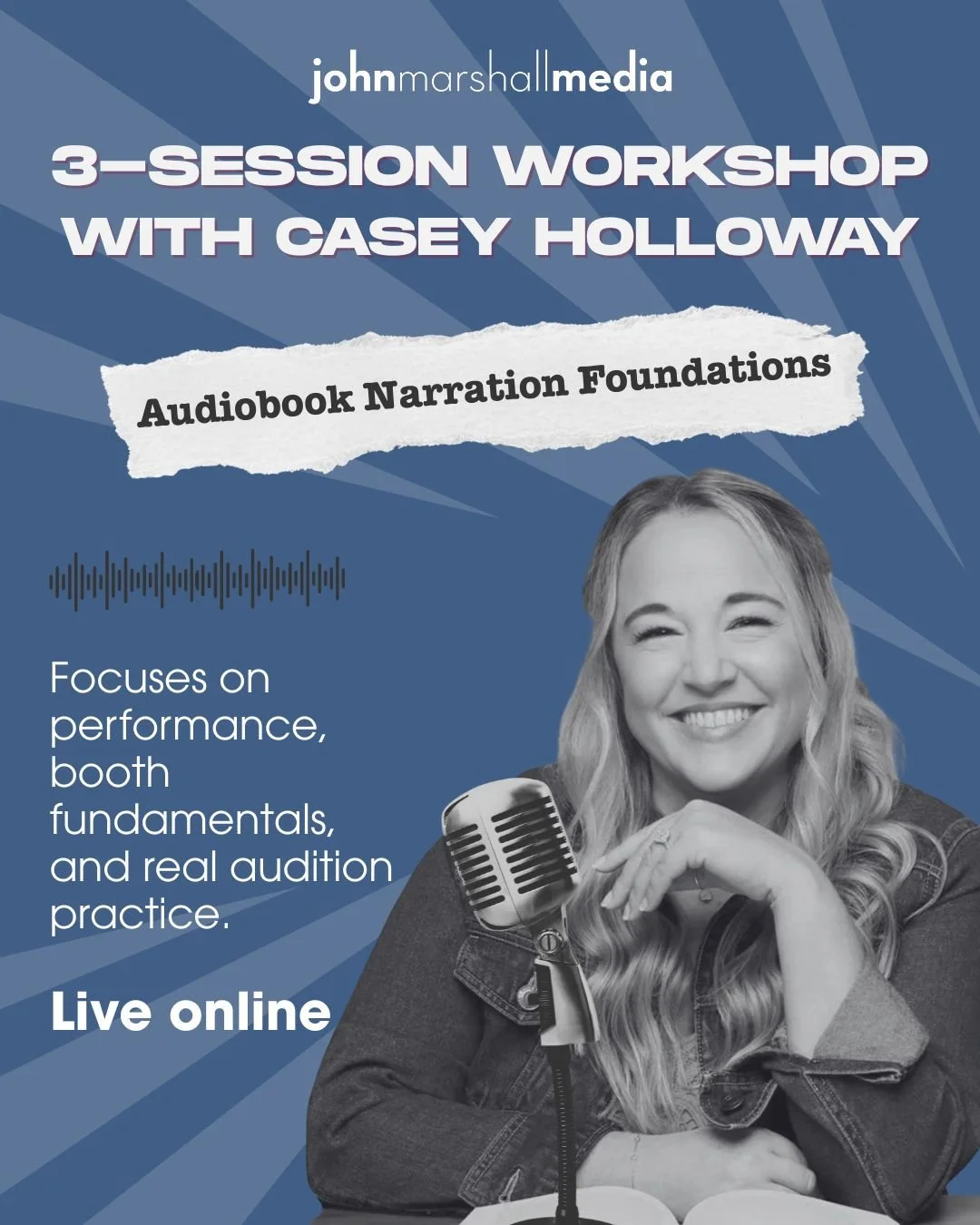
Audiobook Narration Foundations – 3 Session Workshop
Week 1 – Getting Started: Fundamentals & Booth Basics
We’ll kick things off with the foundations of audiobook narration: understanding the workflow, exploring vocal and performance basics, and learning the essentials of booth and mic technique. Students will get hands-on practice and learn what to expect once they begin booking real projects.
Week 2 – Bringing the Story to Life: Performance & Prep
This week is all about turning text into an engaging performance. We’ll cover fiction and nonfiction approaches, character choices, pacing, emotional connection, and practical book-prep tools. Plenty of in-booth practice to help you start finding your narrator style.
Week 3 – Auditioning with Confidence + Special Guest
Our final week focuses on building strong, confident audition habits. Students will participate in a supportive mock audition, followed by feedback and insight from a guest producer from John Marshall Media. A great chance to learn what casting teams listen for and how to stand out.
Cancellation Policy
We understand that plans can change. Cancellations made at least 7 days in advance will receive a full refund. Cancellations made between 7 days and 48 hours prior to the session are eligible for a 50% refund. Cancellations within 48 hours, including no-shows, are non-refundable.
One-on-One Audiobook Coaching offers fully personalized instruction designed around where you are right now as a narrator—and where you want to go next.
Whether you are brand new to audiobook narration, transitioning from voiceover or acting, preparing for auditions, refining long-form performance skills, or troubleshooting technical or performance issues, these private sessions are customized entirely to your needs.
Sessions may focus on performance, narration technique, character work, pacing and stamina, audition preparation, ACX or publisher expectations, home studio workflows, or problem-solving specific challenges you’re encountering in real projects. Coaching is practical, direct, and grounded in real-world audiobook production standards.
Unlike group classes, one-on-one coaching allows for deep focus, detailed feedback, and targeted exercises designed specifically for your voice, material, and career stage. You control the agenda, and every minute is spent working on what will move you forward most effectively.
This coaching is suitable for:
• Beginners seeking structured guidance and confidence
• Voice actors transitioning into long-form narration
• Intermediate narrators refining performance and consistency
• Experienced narrators preparing demos, auditions, or publisher work
• Authors self-narrating their own audiobooks
Each session is designed to leave you with clear feedback, actionable next steps, and a stronger understanding of how to improve your audiobook narration efficiently and professionally.
Buy your spot and we’ll be in touch to schedule a time that works for you.
Cancellation Policy
We understand that plans can change. Cancellations made at least 7 days in advance will receive a full refund. Cancellations made between 7 days and 48 hours prior to the session are eligible for a 50% refund. Cancellations within 48 hours, including no-shows, are non-refundable.
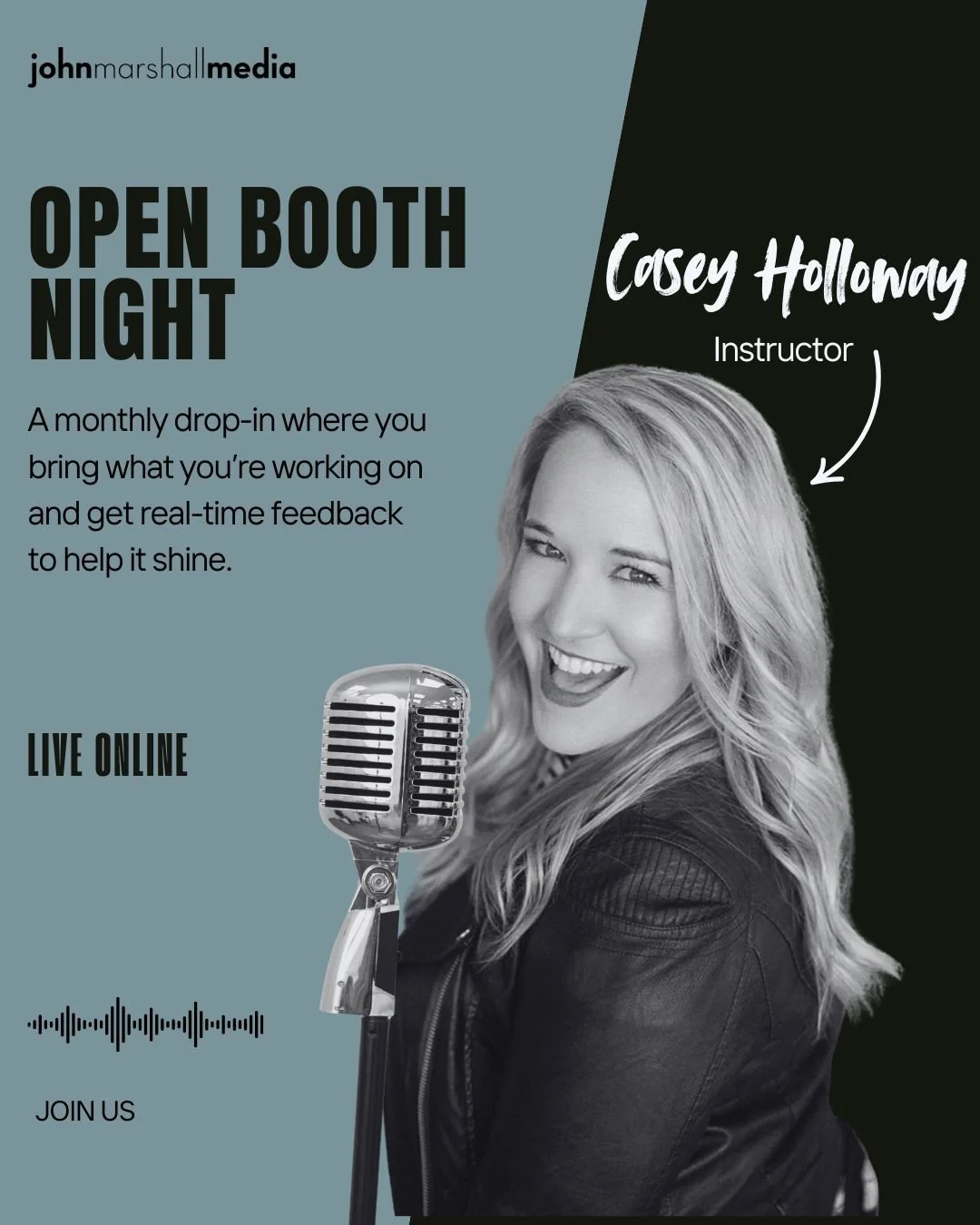
A Monthly Drop-In Session for Audiobook Narrators with instructer Casey Holloway.
6-9pm EST
Whether you're prepping an audition, building your reel, or stretching into a new genre, Open Booth Night gives you a live, low-stakes space to read and get real time feedback.
Every month, we invite you to bring whatever you're working on. A script that's sitting in your queue, a sample outside your comfort zone, a project you want a fresh ear on and read it live for the group. You'll receive live direction and feedback you can put to work immediately. Not to mention that in a group setting, every read is a learning opportunity, whether or not it's yours.
This class is for narrators at every level. Whether you're just starting out or have dozens of titles under your belt, there's always value in putting new material in front of a fresh set of ears.
Format: 2-hour drop-in session, limited to 10 participants. Investment: $45.
Sessions are led by a rotating lineup of industry professionals, including JMM coaches and producers.
Cancellation Policy
We understand that plans can change. Cancellations made at least 7 days in advance will receive a full refund. Cancellations made between 7 days and 48 hours prior to the session are eligible for a 50% refund. Cancellations within 48 hours, including no-shows, are non-refundable.
More Advanced Courses & Voiceover Actors Transitioning to Audiobooks
Audiobook narration is not voiceover—and experienced VO actors often need to retrain specific habits to succeed in long-form storytelling.
These programs are built for working voice talent who want to adapt their performance, pacing, and workflow to meet professional audiobook standards.
One-on-One Audiobook Coaching offers fully personalized instruction designed around where you are right now as a narrator—and where you want to go next.
Whether you are brand new to audiobook narration, transitioning from voiceover or acting, preparing for auditions, refining long-form performance skills, or troubleshooting technical or performance issues, these private sessions are customized entirely to your needs.
Sessions may focus on performance, narration technique, character work, pacing and stamina, audition preparation, ACX or publisher expectations, home studio workflows, or problem-solving specific challenges you’re encountering in real projects. Coaching is practical, direct, and grounded in real-world audiobook production standards.
Unlike group classes, one-on-one coaching allows for deep focus, detailed feedback, and targeted exercises designed specifically for your voice, material, and career stage. You control the agenda, and every minute is spent working on what will move you forward most effectively.
This coaching is suitable for:
• Beginners seeking structured guidance and confidence
• Voice actors transitioning into long-form narration
• Intermediate narrators refining performance and consistency
• Experienced narrators preparing demos, auditions, or publisher work
• Authors self-narrating their own audiobooks
Each session is designed to leave you with clear feedback, actionable next steps, and a stronger understanding of how to improve your audiobook narration efficiently and professionally.
Buy your spot and we’ll be in touch to schedule a time that works for you.
Cancellation Policy
We understand that plans can change. Cancellations made at least 7 days in advance will receive a full refund. Cancellations made between 7 days and 48 hours prior to the session are eligible for a 50% refund. Cancellations within 48 hours, including no-shows, are non-refundable.
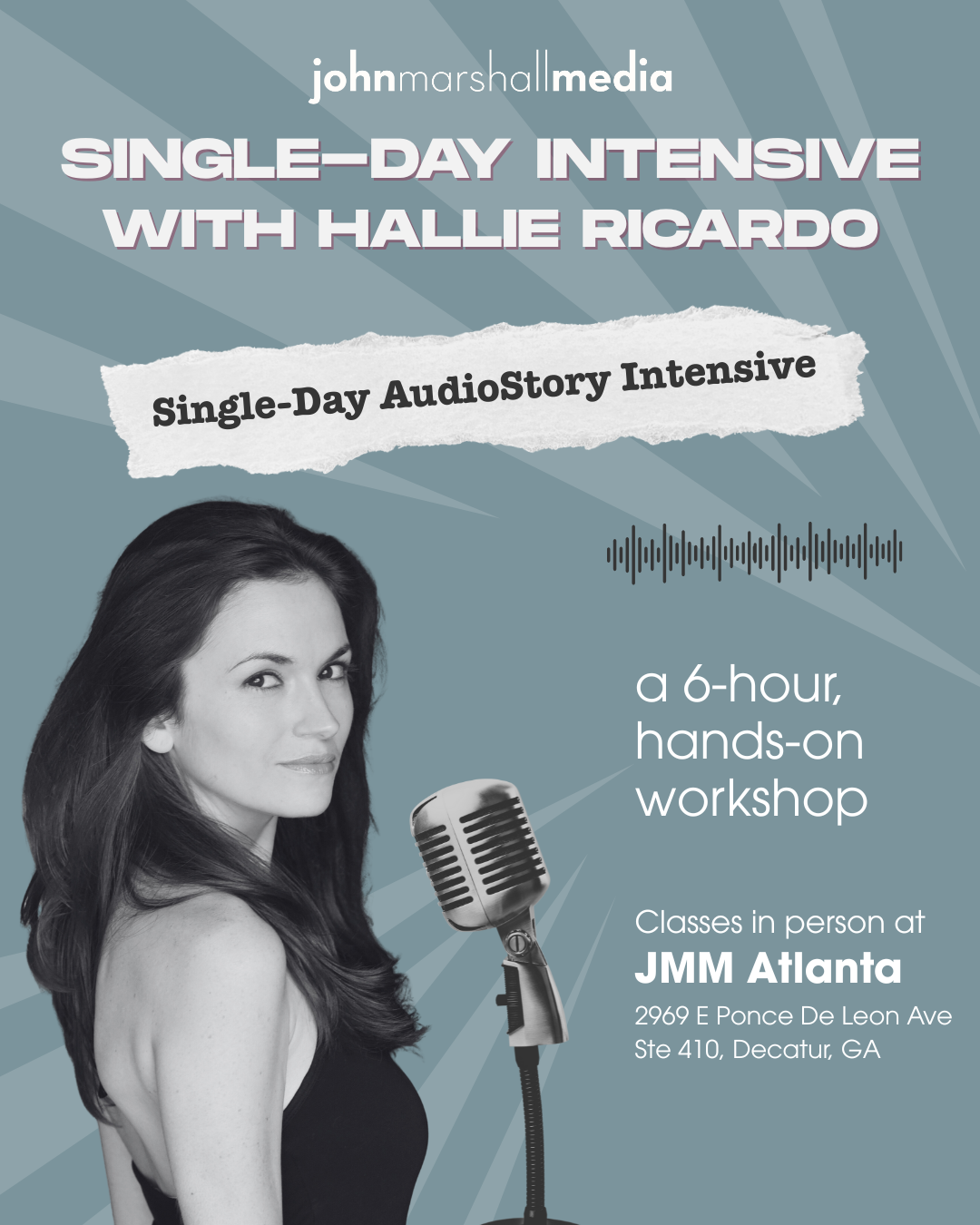
Launch your audiobook narration career with JMM’s Single-Day Audiobook Intensive from our studio based in Atlanta GA. A 6-hour, hands-on workshop delivering expert coaching, publisher-ready acting techniques, and professional demo samples to transform your storytelling skills in a small-group setting.
Curriculum (6-Hour Single-Day Intensive, Capped at 8–12 Participants)
Performance Deep-Dive (1.5 hours)
Perform audiobook script excerpts in a supportive group setting, receiving tailored feedback from an expert coach on pacing, tone, and emotional delivery.
Analyze strengths and refine weaknesses to meet ACX and publisher standards, with real-time direction to enhance narrative flow.
Acting for Audiobook Characters (2 hours)
Learn director-guided acting techniques to craft vivid, authentic character voices, focusing on vocal nuances, emotional depth, and subtext interpretation.
Engage in group and individual exercises to develop distinct character portrayals and maintain consistency across genres (e.g., fiction, non-fiction, multi-character narratives).
Narration Technique Mastery (1.5 hours)
Master advanced narration skills, including breath control, dynamic vocal modulation, and sustained energy for long-form audiobook recording.
Practice customized drills to address specific challenges (e.g., pacing for suspense, voicing dialogue-heavy scripts), with peer and coach feedback.
Career-Building and Demo Creation (1 hour)
Record a professional-quality audiobook sample under expert guidance, suitable for audition submissions or demo reels.
Develop a personalized career roadmap, including script selection, genre specialization, and strategies for pitching to publishers and platforms like ACX.
Note: Includes breaks and Q&A time integrated throughout the day. Participants leave with a polished audio sample and a tailored action plan for next steps in their narration career.
Fee
Single-Day Intensive (6 Hours): $295
Cancellation Policy
We understand that plans can change. Cancellations made at least 7 days in advance will receive a full refund. Cancellations made between 7 days and 48 hours prior to the session are eligible for a 50% refund. Cancellations within 48 hours, including no-shows, are non-refundable.
Studio Setup, Demos & Pitching
Strong performance isn’t enough if your audio, materials, or presentation don’t meet professional standards.
These programs focus on making a professional home studio for audiobooks, audiobook narrator demo creation, and pitching fundamentals required to be taken seriously by publishers, producers, and audiobook casting teams. These programs are especially useful for narrators preparing to work on ACX as an audiobook narrator and to meet professional casting expectations.
This live online course is taught by John Marshall Media’s Chief Engineer, who has recorded and supervised hundreds of professional audiobooks and oversees studio design, equipment purchasing, and engineer training for John Marshall Media’s New York and Atlanta facilities.
The curriculum is grounded in real-world audiobook production workflows used by major publishers, as well as JMM’s “Studio in a Box” system, which has successfully enabled authors, narrators, and public figures to record publisher-ready audiobooks from home.
This is a practical, narrator-specific course focused on building a clean, reliable home recording environment that meets publisher and ACX technical standards—without unnecessary gear, overprocessing, or bad habits.
What You’ll Learn
Choosing the Right Room and Recording Environment
• How to select the best room in your home for audiobook recording
• Understanding room shape, size, and surface reflections
• Managing airflow, HVAC noise, and external sound sources
• Identifying room problems versus equipment problems
Home Studio Foundations for Audiobook Narration
• How audiobook home studios differ from music and general VO setups
• How to meet publisher and ACX technical standards consistently
• Common setup mistakes that lead to rejected or flagged audio
Equipment Selection at Multiple Budget Levels
• Recommended microphones at entry, mid, and higher price points
• Audio interfaces and mic preamps appropriate for narration
• What gear to avoid, even if it’s widely marketed or expensive
• Essential accessories that actually impact recording quality
Microphone Technique and Signal Path Basics
• Understanding microphone pickup patterns and how they determine speaking position
• Proper microphone placement, distance, and angle for narration
• Gain staging from microphone to interface for clean, stable audio
• Preventing plosives, sibilance, and inconsistent tone at the source
Recording Fundamentals for Narrators
• Setting proper input levels for healthy signal-to-noise ratio
• Monitoring correctly while recording long-form narration
• Identifying distortion, noise, and technical issues in real time
• Establishing repeatable recording habits for consistency
Processing: What Narrators Should and Should Not Do
• Why compression, gating, and aggressive processing are usually mistakes
• Plugins and settings narrators should avoid entirely
• Understanding clean capture versus post-production processing
• When minimal processing is appropriate—and when it is not
Room Treatment and Practical Acoustic Control
• Simple, effective ways to reduce echo and room coloration
• Portable and low-cost treatment solutions that actually work
• What acoustic foam can and cannot solve
• Optimizing your setup without over-treating the space
File Management and Recording Hygiene
• Proper file naming conventions for audiobook production
• Session organization to prevent errors and lost work
• Managing pickups, revisions, and chapter updates
• Backup practices and long-term file storage
Audio Formats and Delivery Standards
• Understanding WAV vs. MP3 and when each is used
• Sample rate and bit depth explained clearly
• Preparing files for delivery to publishers, producers, or ACX
• Avoiding common formatting and export mistakes
Working With Publishers and Producers
• What technical questions to ask before a recording begins
• Understanding delivery specs and communication expectations
• Avoiding mistakes that undermine professional confidence
• Knowing when to ask for clarification and how to do it effectively
Outcome
By the end of this course, participants will be able to confidently set up and operate a narrator-appropriate home studio, record clean and compliant audiobook audio, and communicate effectively with publishers and producers using professional workflows and terminology.
Buy your spot and we’ll be in touch to schedule a time that works for you.
Cancellation Policy
We understand that plans can change. Cancellations made at least 7 days in advance will receive a full refund. Cancellations made between 7 days and 48 hours prior to the session are eligible for a 50% refund. Cancellations within 48 hours, including no-shows, are non-refundable.
Every narrator's path is different. That's why we offer Full Demo Production, Demo Curation from Existing Samples, and Consultation / Sample Assessment services—so you can get the level of support that's right for where you are in your narration journey.
FULL DEMO PRODUCTION
Remote: $2,220
In-studio: $2,520
Our full demo production package is designed to showcase your unique strengths as a narrator and create a polished, professional demo tailored to your goals.
What's Included:
• Discovery Meeting – We begin with a one-on-one consultation to discuss your style, experience, career goals, and the type of demo that best supports your next steps. For remote demos, we'll also review the home recording process. (Approx. 1 hour)
• Prep & Planning – Your director works with you to select and refine material that highlights your strengths. We source scripts, pull sides, provide feedback, and ensure everything is ready before recording. Scheduling and session coordination are also included. (Approx. 2–3 hours, including an additional prep meeting)
• Recording Session – Record either in one of our studios or from your home studio with live direction and support. Session length varies based on the narrator and project needs. (Typically 1–2 hours)
• Post-Production – Professional editing and assembly of your demo. (Approx. 1 hour)
• Review Session – Listen to the completed demo with your team, discuss any final notes, and ensure the finished product reflects your goals. (Approx. 1 hour)
• Final Revisions & Mastering – One round of adjustments is included, followed by final mastering and delivery of your completed demo. (Approx. 1 hour)
Choose the recording experience that works best for you: remotely from your home studio or in person at our New York City or Atlanta facilities.
If you plan to record from home, we strongly recommend taking our Home Studio Setup class to ensure your recording environment and equipment meet professional audiobook standards.
DEMO CURATION FROM EXISTING SAMPLES
Remote: $1,290
This service is designed for narrators who already have recorded material and would like expert guidance shaping it into a cohesive, marketable demo.
What's Included:
• Discovery & Assessment Meeting – We begin with a one-on-one consultation to discuss your goals, evaluate your existing recordings, and determine whether your current material can support a curated demo or if a full demo production would better serve your needs. (Approx. 1 hour)
• Demo Strategy & Planning – Your director carefully reviews your recordings, selects the strongest excerpts, develops the running order, and identifies the material needed to create a polished demo. You'll receive guidance on recording any required intros or slates, and we'll coordinate all materials for production. (Approx. 1–2 hours)
• Post-Production – Professional editing, assembly, and mixing of your demo. (Approx. 1 hour)
• Review Session – Listen to the completed demo with your team, discuss any final notes, and ensure the demo accurately reflects your strengths and goals. (Approx. 1 hour)
• Final Revisions & Mastering – One round of adjustments is included, followed by final mastering and delivery of your completed demo. (Approx. 1 hour)
CONSULTATION / SAMPLE ASSESSMENT
Remote: $600
Not sure whether you're ready for a demo? Looking for professional feedback on your current samples?
This consultation is designed for narrators who would like expert guidance on their existing recordings before taking the next step.
What's Included:
• Sample Review – A director listens to your submitted recordings and evaluates performance, audio quality, demo suitability, and overall marketability.
• One-on-One Consultation – Meet with your director to discuss strengths, areas for improvement, and opportunities for development. You'll receive honest, actionable feedback tailored to your goals. (Approx. 1 hour)
• Recommendations & Next Steps – Receive guidance on whether your material is ready for demo curation, would benefit from a full demo production, or if additional coaching, recording, or sample development is recommended.
This service is ideal for narrators seeking professional feedback, direction, and a clear understanding of their next best step.
Buy your spot and we’ll be in touch to schedule a time that works for you.
Cancellation Policy
We understand that plans can change. Cancellations made at least 7 days in advance will receive a full refund. Cancellations made between 7 days and 48 hours prior to the session are eligible for a 50% refund. Cancellations within 48 hours, including no-shows, are non-refundable.
FAQ, Articles and John Marshall’s Rants
-
And why assuming otherwise causes more failed audiobook starts than almost anything else.
People usually say it casually.
“I’ve been doing voiceover for years.”
It’s rarely framed as a question, but it carries an assumption: that audiobook narration is a natural extension of voiceover work. That if you’ve already mastered one, the other should follow easily.
It doesn’t.
And it doesn’t for reasons that are structural, not personal.Audiobooks aren’t “long voiceover.” They are a different job entirely.
These Skills Only Look Related From the Outside
Voiceover and audiobook narration share surface similarities: microphones, scripts, studios, voices that sound good in headphones.
That’s where the overlap largely ends.
Most voiceover work is designed to be short-form and self-contained. Commercials, explainers, corporate narration, e-learning — each piece resets quickly. You perform, stop, reset, repeat.
Audiobooks don’t reset.
They accumulate.
Every interpretive choice compounds over hours of finished audio. Tone, pacing, point of view, character logic — all of it must remain coherent not for seconds, but for days of recording and weeks of listener engagement.
Audiobook narration doesn’t test whether you can perform well.
It tests whether you can sustain meaning.Duration Isn’t a Detail — It’s the Filter
People often underestimate audiobook narration by describing it as “long.”
That misses the point.
Long-form narration functions like an endurance sport. It reveals problems you didn’t know you had until you’re far enough in that you can’t hide them anymore.
Voiceover allows frequent resets. Audiobooks don’t.
You must stay mentally present, emotionally grounded, and technically consistent for hours at a time — across multiple sessions — while maintaining continuity you can’t hear from the outside.
This alone eliminates many otherwise skilled voice professionals.
Audiobooks don’t reward moments. They reward consistency.
Much of Voiceover Isn’t Acting — Audiobooks Are
This is where the distinction becomes uncomfortable but essential.
A significant portion of voiceover work is presentational. You’re informing, guiding, selling, or explaining. Clarity and tone are the primary goals.
Audiobook narration is narrative acting.
You’re inhabiting a point of view for hundreds of pages, often without dialogue, without visual cues, and without obvious emotional markers. The work is cumulative and internal.
If your instinct is to “perform the line,” audiobooks quietly expose that habit.
The best audiobook narration doesn’t sound impressive.
It sounds invisible.Audiobooks Don’t Let You Hide
Short-form voiceover forgives a lot. Editing can smooth rough edges. Energy can mask thin interpretation. Style can distract from inconsistency.
Audiobooks don’t forgive those things.
They repeat them.
Audiobook narration reveals:
Whether you actually understand the text as you read it
Whether you can sight-read complex prose with comprehension
Whether your emotional choices are grounded or habitual
Whether you can remain present for hours without drifting
What can be hidden in voiceover becomes unmistakable in long-form storytelling.
Audiobooks don’t expose talent. They expose weaknesses.
This Isn’t a Judgment — It’s a Reality Check
None of this is a criticism of voiceover artists. Many go on to become excellent audiobook narrators.
But the ones who succeed stop assuming the skills transfer automatically.
Audiobooks are not a step up from voiceover.
They are not a side branch of it.
They are not something you casually add.They are a separate craft — with separate demands — and they deserve to be approached directly.
If audiobooks are your goal, train for audiobooks.
Everything else is a detour.(Optional CTA block for the Narration Academy page)
Interested in audiobook narration?
Our programs focus exclusively on long-form storytelling — not generic voiceover technique — because that’s what publishers actually listen for. -
In short, you don’t need them. You already have the books you need . . . they’re the ones you love.
Search for audiobook sample scripts and you’ll find exactly what you’d expect: lists, PDFs, downloadable passages, carefully labeled by genre and length. Fantasy. Romance. Nonfiction. A few pages here, a few paragraphs there.
The assumption behind all of it is simple:
if you can just find the right script, you can practice audiobook narration correctly.It’s a comforting idea.
It’s also mostly wrong.The Sample Script Myth
Sample scripts make sense in voiceover.
Commercial VO auditions rely on short, standardized copy. The goal is to demonstrate tone, clarity, and style quickly. A shared script allows casting directors to compare performances efficiently.
Audiobooks don’t work that way.
No publisher is evaluating you based on how you sound reading a neutral, two-page excerpt written for practice. They’re listening for whether you can sustain storytelling — and sample scripts can’t really show that.
What they can do is give narrators the false impression that audiobook work is about “nailing the read” rather than understanding the text.
Audiobooks aren’t won on excerpts. They’re won on endurance, comprehension, and consistency.
Real Audiobook Work Doesn’t Come in Convenient Chunks
Sample scripts are tidy by design. They’re often written to:
Include obvious emotional turns
Feature clean dialogue beats
Resolve quickly
Real books are messier.
They include exposition, awkward transitions, interior monologue, long descriptive passages, and chapters where nothing “happens” — except the slow accumulation of tone and meaning.
That’s the actual work of audiobook narration. And it’s precisely what most sample scripts avoid.
If you only practice with curated excerpts, you’re training for a job that doesn’t exist.
Public Domain Isn’t the Answer Either
At this point, people usually pivot.
“What about public domain?”
“Can’t I just use classics?”You can — but they introduce a different problem.
Much public-domain material:
Uses outdated language
Follows unfamiliar sentence structures
Doesn’t reflect modern publishing norms
Encourages performative, theatrical habits
That doesn’t make it useless, but it makes it poor preparation for contemporary audiobooks, especially for narrators trying to break in now.
What Publishers Actually Want to Hear
This is the part that surprises people.
Publishers aren’t listening for:
A perfect standalone excerpt
A genre-neutral demo script
A “great voice” reading pretty prose
They’re listening for:
Whether you understand the material
Whether your pacing is sustainable
Whether your narration disappears behind the text
Whether you can stay grounded across long passages that aren’t flashy
Those things can’t be proven with a two-page script designed for practice.
If a script makes audiobook narration feel easy, it’s probably lying to you.
The Better Way to Practice Audiobook Narration
If your goal is audiobook work, the most effective practice doesn’t involve special scripts at all.
It involves:
Reading full chapters, not excerpts
Working in genres you actually enjoy and understand
Practicing continuity across sessions
Paying attention to comprehension before performance
In other words, practice the job — not a simplified version of it.
That’s also why we don’t rely on generic “audiobook sample scripts” in serious audiobook training. They solve the wrong problem.
The Real Reason People Search for Sample Scripts
People don’t search for audiobook sample scripts because they want scripts.
They search because they want:
Reassurance they’re practicing “the right way”
A sense of readiness before taking the leap
Something concrete to hold onto in an unfamiliar craft
That’s understandable.
But audiobook narration isn’t mastered through shortcuts or templates. It’s learned through exposure to real material, real pacing demands, and real narrative responsibility.
The Takeaway
You don’t need audiobook sample scripts.
You need to understand what audiobook narration actually asks of you.Once you do, the question isn’t “What should I read?”
It’s “Can I stay present inside this story for as long as it takes?”That’s the work. Everything else is noise.
-
They may look similar. They aren’t.
Voiceover and audiobook narration are often treated as closely related skills. They aren’t. While both involve microphones and scripts, the work itself—and what it demands from the performer—is fundamentally different.
That confusion is responsible for a lot of frustration, especially among people entering audiobooks from a voiceover background.
These Skills Only Look Related From the Outside
From a distance, voiceover and audiobook narration seem adjacent. Both happen in studios. Both rely on vocal control. Both reward clarity.
Up close, the overlap is thin.
Most voiceover work is short-form and self-contained. Commercials, explainers, corporate narration, e-learning—each piece resets quickly. You perform, stop, reset, and move on.
Audiobooks don’t reset.
They accumulate. Every choice compounds over hours of finished audio. Tone, pacing, point of view, and emotional logic must remain coherent not for seconds, but for days of recording and weeks of listening.
Length Isn’t a Detail. It’s the Filter.
People often describe audiobook narration as difficult because it’s “long.” That understates the problem.
Long-form narration is an endurance test. It exposes weaknesses that short-form work never reveals. Voiceover allows frequent resets. Audiobooks demand sustained presence—mentally, emotionally, and technically—across multiple sessions.
If you can’t maintain focus, consistency, and comprehension, it shows quickly. And once it shows, it repeats.
Performance Style: Presentational vs. Narrative
Voiceover is primarily presentational. You’re guiding, explaining, selling, or informing. The goal is clarity and impact.
Audiobook narration is narrative. You’re inhabiting a point of view and staying inside it. The performance is cumulative and often understated. The listener shouldn’t notice you performing at all.
If your instinct is to “perform the line,” audiobooks quietly punish that habit.
Acting Demands
Much voiceover work involves limited acting. It relies more on delivery and polish than on sustained emotional logic.
Audiobook narration requires continuous acting—even in nonfiction. You must understand the text well enough to make correct emotional and pacing decisions over long stretches, without visual cues or scene partners.
Sounding good isn’t enough. You have to know where the story is going.
Editing and Error Recovery
Voiceover workflows allow heavy editing. Mistakes can be fixed. Performances can be shaped after the fact.
Audiobooks allow far less rescue. Inconsistencies, misinterpretations, and fatigue compound. What isn’t working becomes obvious to the listener within minutes.
Audiobooks don’t let you hide.
Pacing and Consistency
Voiceover pacing is managed line by line. Each take is a reset.
Audiobook pacing must hold across chapters, sessions, and days. The challenge isn’t intensity—it’s continuity. Listeners trust narrators who are steady, not flashy.
What Each Discipline Rewards
Voiceover rewards precision, clarity, and immediate impact.
Audiobook narration rewards endurance, comprehension, restraint, and consistency.
That single distinction explains why strong voiceover experience does not reliably translate to audiobook success.
The Bottom Line
Voiceover and audiobook narration are not steps on the same ladder. They are parallel disciplines with different demands, workflows, and measures of success.
You don’t need to choose one forever.
But you do need to train for the one you want to do well.Confusing them is where most frustration begins.
-
When people start looking for their first audiobook job, they often make the same mistake: they try to sound versatile.
They describe themselves as:
“Open to any genre”
“Comfortable with all material”
“Willing to read anything”
It feels like a safe approach. It isn’t.
In practice, it does the opposite of what you intend.
Versatility Is Not What Gets You Hired First
At the beginning of an audiobook career, versatility isn’t a strength. It’s a signal that you don’t yet know where you belong.
Publishers and producers aren’t looking for someone who might work. They’re looking for someone who feels like an obvious fit for a specific project.
When you say you can do everything, you sound like someone who hasn’t done anything yet.
Your First Job Isn’t About Proving Range
New narrators often assume their first audiobook job should demonstrate how broad their skills are.
That’s backwards.
Your first job should demonstrate:
Taste
Judgment
Self-awareness
Alignment with the material
No one is expecting range from an unproven narrator. They’re listening for whether you understand the kind of book you’re reading—and whether you belong in that world.
Pick a Lane. Narrow It Further Than You Think.
The narrators who get hired first are usually the ones who can say something like:
“I’m focused on contemporary nonfiction by thought leaders.”
“I specialize in grounded, character-driven literary fiction.”
“I’m interested in narrative history and biography.”That specificity does something important. It removes doubt.
It tells the producer you’ve thought seriously about where your voice fits—not just where you hope it might.
Specialization isn’t limiting. It’s clarifying.
Read What You Actually Like — Not What You Think Will Sell
Another common mistake: practicing or demoing genres you don’t actually enjoy, because you think they’re more marketable.
Listeners can hear disinterest. So can producers.
If you don’t like the material, you won’t sustain it. Audiobook narration punishes indifference more than almost any other medium.
Your first job is far more likely to come from a genre you already read, understand, and care about.
Present Yourself as a Fit, Not a Favor
Early narrators sometimes frame themselves as flexible, eager, and grateful.
That’s human. It’s also risky.
Producers don’t want to feel like they’re doing you a favor. They want to feel like they’ve found someone who belongs on the project.
Position yourself as:
A good match
A clear choice
A low-risk decision
That doesn’t require experience. It requires clarity.
Don’t Overstate What You Haven’t Done
It’s tempting to inflate experience, especially when everyone else seems to.
Resist that impulse.
Producers are not expecting a long résumé from a first-time narrator. They are listening for honesty, self-awareness, and realistic positioning.
Confidence comes from knowing your limits—not pretending they don’t exist.
Your First Job Is a Beginning, Not a Statement
There’s a lot of pressure to make your first audiobook job mean something—to prove talent, ambition, or future potential.
It doesn’t have to.
Your first job only needs to prove one thing: that you were the right choice for that book.
Everything else comes later.
The Takeaway
If you’re trying to get your first audiobook job, stop trying to sound adaptable.
Instead:
Choose a narrow focus
Read what you genuinely enjoy
Present yourself as a clear fit
Be honest about where you are
Specialization isn’t something you earn later.
It’s how you get started.
