
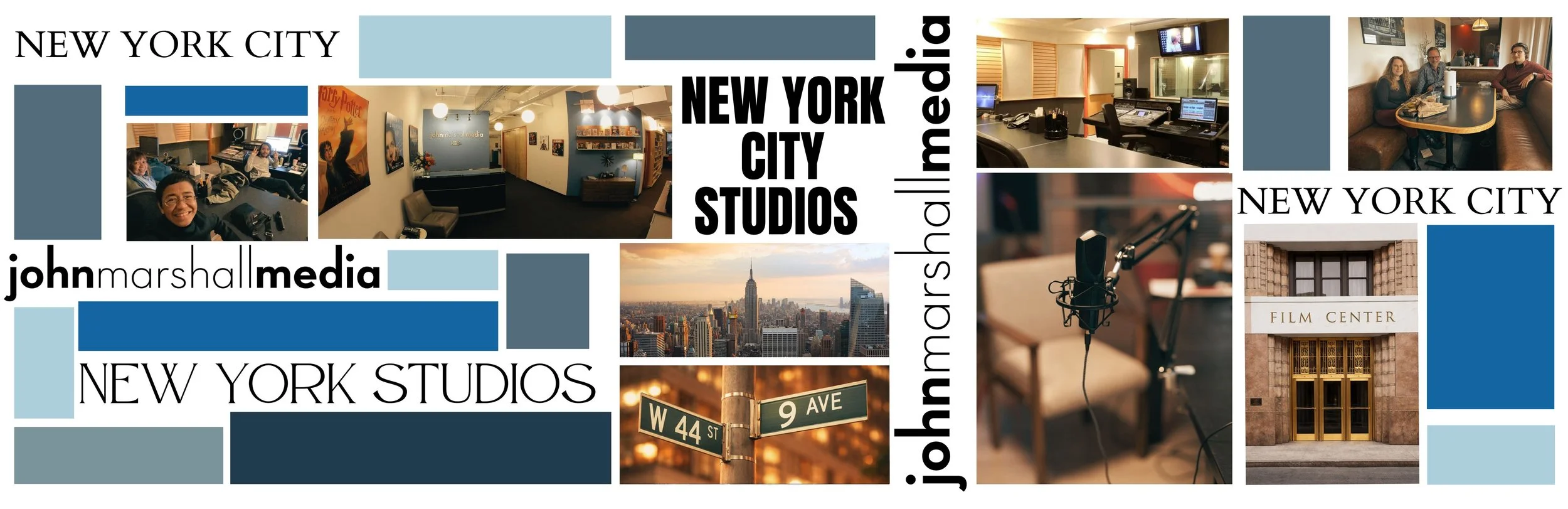
JMM Studios New York | Manhattan's Premier Voice Recording Studio
JMM Studios New York is John Marshall Media’s purpose-built voice recording facility in the heart of Manhattan. Designed for audiobook recording, commercial voiceover, ADR, podcast recording, and other long-form spoken-word projects, we support both in-person and remote-directed sessions via industry-standard connectivity for clients across the country. With extreme acoustic isolation, professional-grade equipment, and experienced engineers focused on capturing clean, intimate performances, our New York City studios deliver consistent, publisher-grade sound at the highest level.
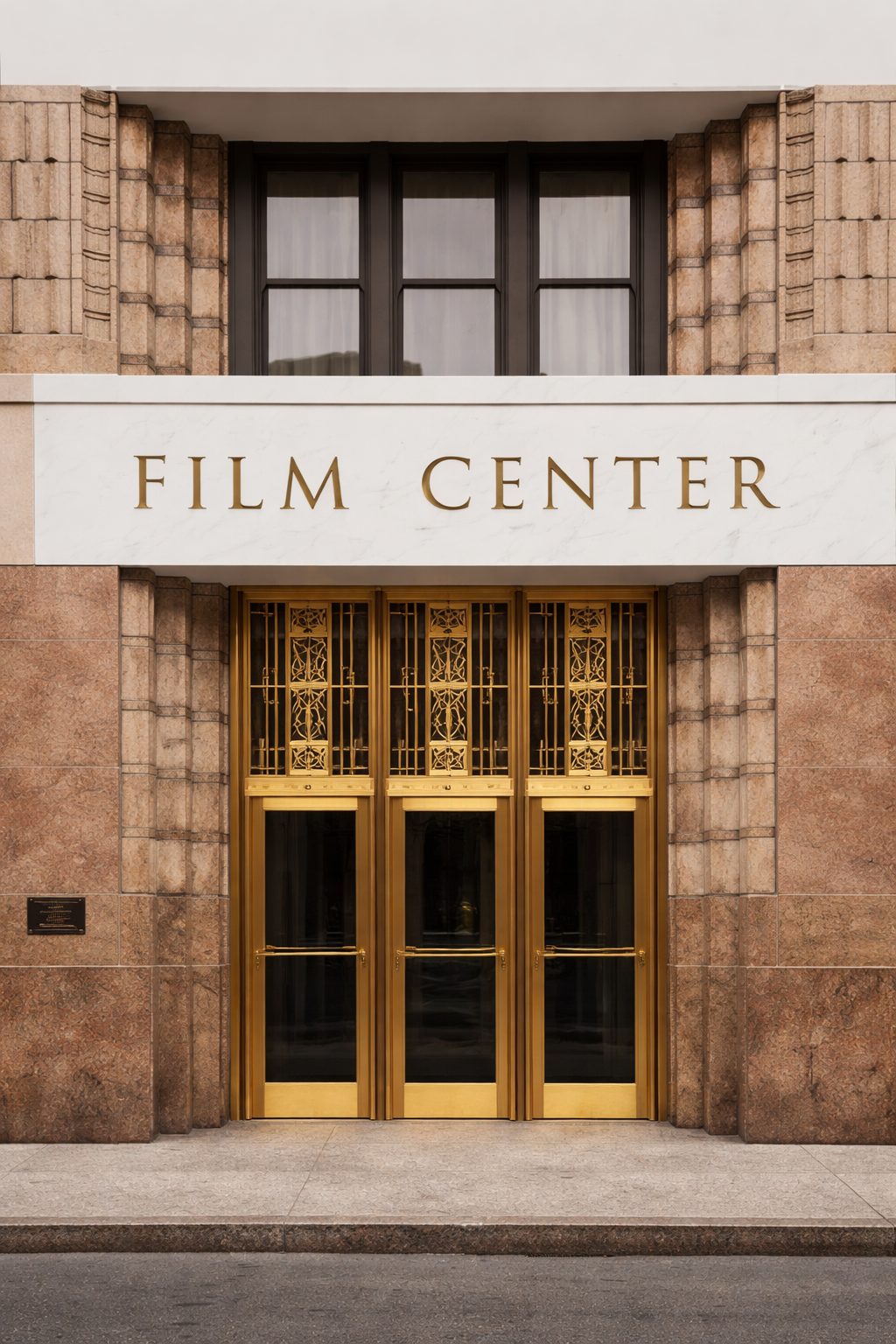

The Quietest Voice Recording Studio in Manhattan
JMM Studios – New York
630 Ninth Ave, Suite 1108
New York, NY 10036
John Marshall Media’s JMM Studios in Manhattan is purpose-built for professional audiobook recording and voiceover production. Engineered for extreme acoustic isolation and ultra-low noise floors, our studios deliver the clean, intimate sound required by major publishers and producers. Whether you’re recording a full-length audiobook, national commercial voiceover, or premium podcast, our Manhattan studio provides the technical precision and spoken-word expertise that typical NYC recording studios simply don’t offer.
Producing a Full Audiobook?
If you’re a publisher or author producing a complete audiobook, JMM Studios is part of John Marshall Media’s full-service audiobook production team. From casting and directing to editing and distribution, we manage the entire production process.

Trusted by the Industry’s Best
Many of our clients have been with us for over 30 years. We’d like to think they stay because of what we offer beyond great audio—reliability, collaboration, and a team that treats every project as its own.






















Our New York City facility (JMM New York) includes six purpose-built voice recording studios, each engineered to the same exacting acoustic standards. Every studio features extreme isolation, ultra-low noise floors, silent airflow, and carefully tuned acoustics designed specifically for spoken-word recording. Learn more about our studio design philosophy here.
This consistency allows us to support everything from single-narrator sessions to complex, multi-cast productions—without compromising sound quality, comfort, or workflow. Whether recording commercial voiceover, ADR, filmed interviews, podcast production, narration, or audiobook recording, or other long-form spoken-word projects, our New York City studios deliver the same clean, intimate sound every time.
Camera-ready recording environments make the space ideal for branded content and video podcast production.
These studios are part of John Marshall Media’s end-to-end audiobook production services, supporting projects from casting and recording through editing, distribution, and launch.
6 Ultra-quiet Voice Recording Studios
in the Heart of New York City.
Flagship studio with an oversized vocal booth accommodating up to four performers and a spacious control room for producers and creative teams.
Studio A
Single-narrator studio with a large producer’s desk suitable for creative teams of 2 or 3.
Studio B
Compact, ultra-quiet booth designed for focused solo recording sessions with engineer.
Studio C
Isolated single-talent studio with a dedicated control room, ideal for long-form narration and uninterrupted recording sessions.
Studio G
Mid-sized, ultra-quiet, single-narrator studio with a large producer’s desk suitable creative teams of 2 or 3.
Studio M
Larger, ultra-quiet booth designed for focused solo recording sessions with engineer and a comfy armchair and desk for a producer/director.
Studio E

Video: New York Studio Tour
Step inside John Marshall Media New York.
First stop: Reception.
Types of Voice Recording Sessions
Our New York City voice recording studios (JMM New York) support professional voiceover, ADR, mix-to-picture, podcast and audiobook recording sessions, engineered for projects that demand precision, consistency, and ultra-low noise floors.

Voiceover Recording
New York City voiceover recording for commercial, corporate, documentary, and digital media. Clean signal chains, accurate monitoring, and controlled acoustics deliver broadcast-ready voice tracks with minimal post-production.
ADR Recording
ADR recording studios in New York City optimized for film, television, and streaming projects. Precise mic placement, controlled acoustics, and repeatable setups support accurate dialogue replacement and seamless sync to picture.
Audiobook Recording
Professional audiobook recording in New York City for single-narrator and multicast productions. Designed for long-form spoken-word performance, consistent sound across sessions, and publisher-grade recording standards. And explore our full-service audiobook production and distribution services
Podcast Recording
Professional podcast recording in New York City for interview-based and multi-host productions. Studio A features a large, acoustically controlled recording room designed for multiple microphones, in-person interviews, and roundtable conversations. The space supports clean spoken-word capture for podcasts while also being camera-ready, making it ideal for video podcasts, filmed interviews, and visual content alongside audio recording.
Mix-to-Picture Post-Production
Mix-to-picture services in New York City for film, television, and streaming content. Final audio mixing performed directly to locked picture, balancing dialogue, ADR, music, and sound design to meet broadcast and theatrical delivery requirements.
Studio Equipment & Signal Chain
Every one of our voice recording studios is equipped identically by design. This ensures absolute consistency: no matter which room you record in, you get the same ultra-quiet environment, the same signal chain, and the same pristine spoken-word sound. Producers never have to worry about room-to-room differences, tonal shifts, or technical surprises.
Microphones & Signal Path
Neumann U87 microphones in every studio — the industry standard for spoken-word recording
Neumann microphone cables, selected for maximum signal integrity and noise rejection
Focusrite microphone preamps, chosen for clarity, transparency, and low noise
Apogee analog-to-digital converters, preserving every nuance of the performance
Interfaces & Monitoring
Universal Audio Apollo interfaces in every room for reliable, high-resolution capture and monitoring
Acoustic Engineering & Isolation
Free-floating, box-within-a-box recording booths
IAC and custom acoustic systems engineered specifically for voice
Specialized radio-frequency shielding to eliminate interference
Ultra-low noise floors with extreme isolation from building vibration and exterior sound
Software & Recording Workflow
Pro Tools and Reaper available in every studio
Apple Mac systems dedicated exclusively to recording and production
Simultaneous dual-path recording on every session: audio is captured to the primary system and backed up in real time to an independent drive for redundancy and security
What This Means for You
The same sound, every room, every day
Seamless studio changes without technical recalibration
Confidence for publishers, producers, and narrators working across multi-day or multi-room sessions
Studio Design Philosophy
Silence Matters: How We Design Voice Recording Studios for Spoken-Word Performance
Recording the human voice—especially for audiobooks, narration, and spoken-word work—is fundamentally different from recording music. A great voice recording studio is not about vibe, loud playback, or flashy gear. It’s about silence, control, and intimacy.
At John Marshall Media, our studio design philosophy starts with a simple premise: when you hear a voice, you should hear only the voice—not the room, not the building, and not the city outside.
Silence Is Not the Absence of Sound — It’s the Absence of Distraction
In spoken-word recording, even the smallest acoustic imperfections become audible. Subtle reverberation, HVAC noise, distant traffic, or building vibration can all interfere with clarity and performance. The quieter the room, the closer the microphone can be placed to the voice—and the more intimate, present, and emotionally connected the recording becomes.
That intimacy is what listeners respond to. It’s also what makes spoken-word recording so unforgiving.
This is why our studios are designed from the ground up for ultra-low noise floors, not adapted from music rooms or retrofitted office space.
Box-Within-a-Box Construction: Stopping Sound at the Source
Each of our voice recording studios is built as a self-contained, free-floating room within a room. Floors, walls, and ceilings are acoustically decoupled from the surrounding building using springs, neoprene, and mass isolation techniques. This prevents vibration from traveling into the recording environment—something especially critical in a city like New York.
Low-frequency noise, in particular, is notoriously difficult to stop. The only real solution is mass. Our recording booths weigh thousands of pounds, using dense construction materials specifically designed to block intrusive sound rather than merely absorb it.
When you step inside one of our booths and close the door, the effect is immediate and unmistakable. After a few moments, many people notice they can hear their own breathing—or even their heartbeat. That level of quiet is not accidental. It’s engineered.
Absorption, Not “Foam”: Designing for the Human Voice
A common mistake in studio construction is relying on thin, inexpensive acoustic foam to treat reflections. While this type of material can absorb some high frequencies, it leaves mid-range and low-frequency energy untouched. The result is a voice that sounds unnatural—dull on top, boxy in the middle, and uneven overall.
Spoken-word recording demands broadband absorption across the entire vocal range. This requires thicker, more carefully tuned materials that absorb evenly rather than selectively. In our studios, absorption is balanced with subtle diffusion using wood slats and reflective surfaces to prevent the sound from becoming unnaturally dead or lifeless.
The goal is not to remove character from the voice—but to remove the room from the recording.
Silent Airflow: Comfort Without Compromise
A voice recording booth must be sealed to remain quiet, but performers also need fresh air—sometimes for hours at a time. Delivering airflow without introducing noise is one of the most technically challenging aspects of studio design.
Our studios use slow-velocity airflow systems with long, acoustically lined duct paths and S-curve designs that prevent sound transmission. All ductwork is treated internally with absorption material so that any noise entering the system is eliminated before it reaches the booth.
This allows narrators to remain comfortable throughout long sessions without the hum, hiss, or whistle common in less carefully designed rooms.
Doors, Seals, and the Details That Matter
Even the best isolation design fails if the door isn’t right. Our studio doors are sealed using refrigerator-style magnetic gaskets, creating an airtight acoustic seal when closed. You can hear—and feel—the seal engage.
These details may seem small, but spoken-word recording exposes everything. Every potential noise source must be accounted for.
Consistency Across Studios: One Sound, Every Room
Every voice recording studio in our facility is equipped with the same signal chain, the same acoustic standards, and the same workflow. This consistency is intentional.
Whether a narrator records in one room today and another tomorrow, or whether a multi-day project spans multiple studios, the sound remains identical. Producers never have to recalibrate expectations, and performances remain seamless across sessions.
This philosophy extends to equipment, monitoring, recording software, and backup procedures—so the creative process is never interrupted by technical variables.
Designed for Performers, Not Just Equipment
Finally, great spoken-word recording is about people. Comfort matters. Chairs must be quiet. Booths must feel calm, not claustrophobic. Engineers must know how to place a microphone close enough to capture intimacy without making the performer self-conscious.
Our studios are designed and operated by people who record voice for a living. We know the small things that matter—because in a room this quiet, everything matters.