
Audioplay Adaptation for Immersive Audio
Turning Books and IP into Cinematic Audio
Audioplay adaptation is the foundation of immersive audio. It is the process of transforming existing source material into a performance-ready dramatic script—designed for full-cast acting, directing, sound design, and music. The goal is not simply to read the story aloud, but to make it play, using sound as the primary storytelling medium.
Choosing the Right Adaptation Approach
Every project begins by identifying the adaptation model that best serves the material, the audience, and the creative goals.

Graphic Novel & Comic Adaptation
From Visual Panels to Audio Storytelling
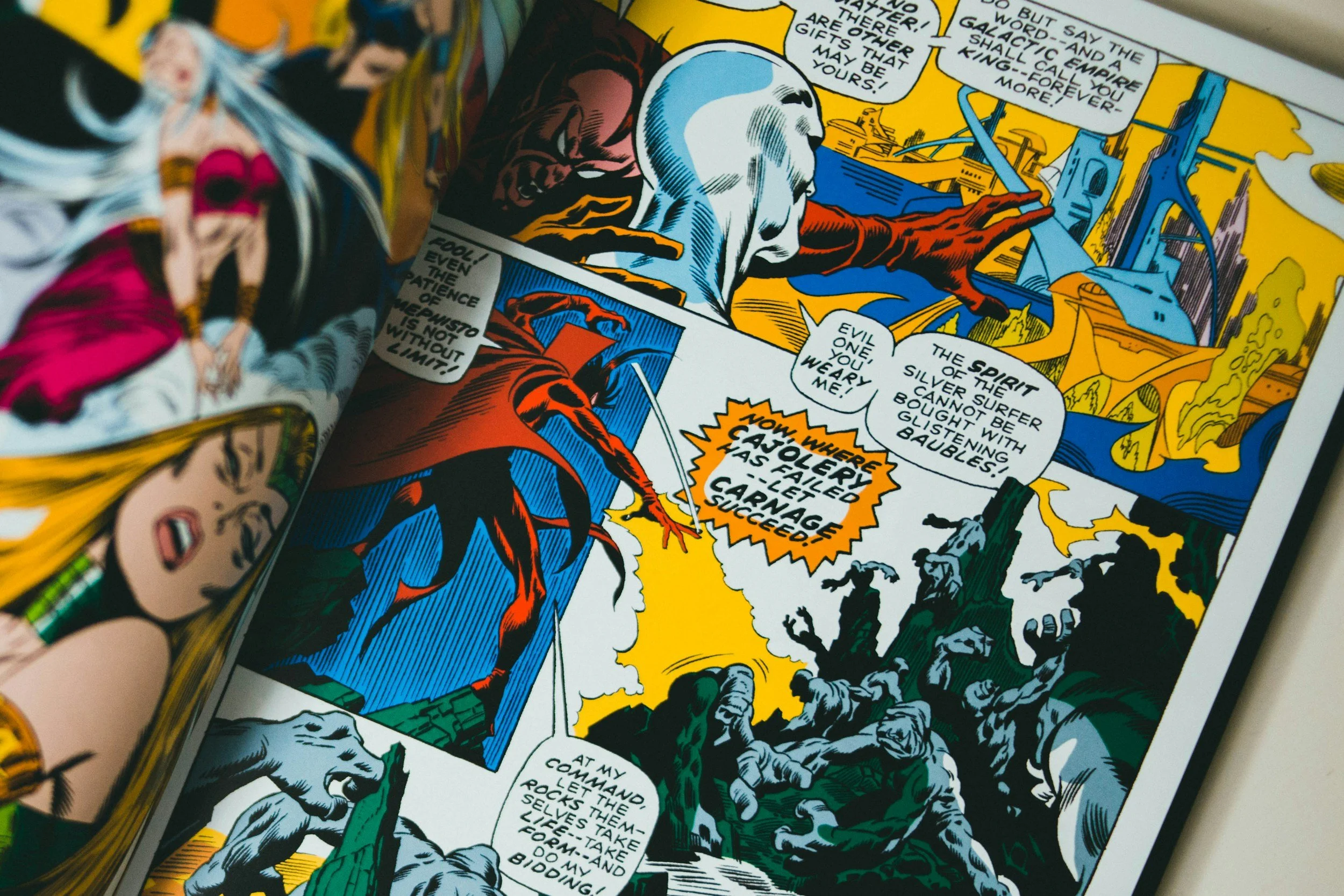
Graphic novels require a fundamentally different approach. The adapter translates visual storytelling into sound.
Panels, transitions, and visual action are reimagined for audio
Decisions are made about what should be spoken versus conveyed through sound
Sound effects often replace visual exposition to keep the experience fluid and natural
The result is an audio experience that preserves clarity and momentum without awkward or excessive narration.

No or Very Light Adaptation
Narrative-Preserving Dramatic Audio
In some projects, the original text is already highly dialogue-driven and benefits from being preserved almost entirely.
Nearly all original wording is retained
Sound design enhances the text rather than replacing it
Minor adjustments may be made in real time during casting or recording
Ideal for prestige editions, anniversary releases, or dialogue-forward works
This approach maintains textual fidelity while adding the richness of full-cast performance and sound.
Cinematic Book-to-Dramatic Adaptation
“Film in Audio”
For many immersive productions, the goal is to create an experience that feels cinematic.
Exposition is reduced or removed wherever sound and performance can carry the moment
Scenes are rewritten to function as dialogue, action, and sonic transitions
Physical movement, environments, and emotional beats are conveyed through sound
This approach allows the story to unfold as if it were happening in real time around the listener.
Writing Sound into the Script
A Clear Responsibility Model
A defining feature of audioplay adaptation is how sound is handled in the script.
What Is Intentionally Left Open
Once essential cues are defined, the sound designer and producer take over creative expansion.
They determine:
The scale and character of environments
Spatial treatment and reverb
Music presence and emotional tone
Crowd density, language textures, and specificity
Additional sound elements that enhance realism and immersion
This division allows the script to remain clean and playable while giving sound design the creative flexibility it needs..
What the Adapter Is Required to Write
The adapter must include essential sound cues directly in the script when those sounds replace removed exposition or affect performance.
These cues must:
Preserve narrative clarity when text is removed
Provide actors and directors with the context needed for believable performance
Example logic
If an action is removed from narration, the sound that communicates that action must be written into the script
If an environment affects vocal delivery (quiet, intimate vs loud, public), that environment must be specified
This ensures that performances feel authentic and that scenes play correctly in the studio..
What an Audioplay Adaptation Delivers
An audioplay adaptation results in a fully realized dramatic script that functions much like a screenplay for audio.
Typical deliverables include:
A complete, performance-ready script
Character lists and casting breakdowns
Clearly attributed dialogue for full-cast recording
Essential sound effect and music notes
Scene descriptions and directing context for the studio
Pronunciation research needs flagged early (proper nouns, invented terms, foreign language)
This script becomes the blueprint for casting, directing, recording, post-production, and final mix.

Why Audioplay Adaptation Matters
Strong audioplay adaptation ensures that:
Actors can perform naturally and believably
Directors can shape scenes with confidence
Editors and sound designers have the right structure to build from
The listener can fully suspend disbelief
It is the difference between an audiobook with sound—and a truly immersive dramatic audio experience.

Producer Oversight
A dedicated producer oversees the project from start to finish, ensuring creative continuity, protecting the publisher’s and author’s vision, managing budget and scope, and coordinating client communication. The producer serves as the final internal checkpoint to ensure everything sounds cohesive and polished.